
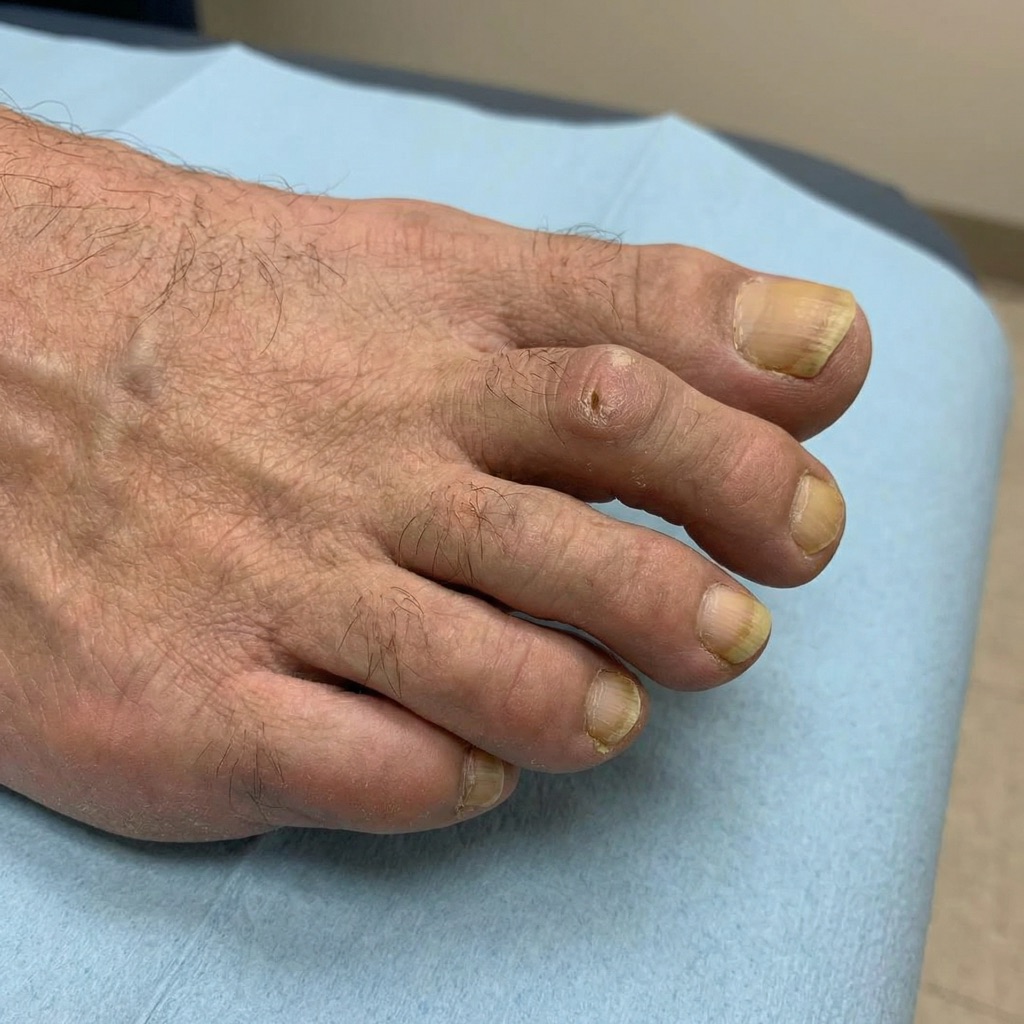
Hammertoe Treatment in Pembroke Pines & Plantation
A hammertoe is a deformity in which one or both joints of the second, third, fourth, or fifth toe bend out of normal alignment, giving the toe a curled or hammer-like shape. Pressure from shoes on the bent toe leads to pain, corns, and irritation. Hammertoes usually start small and worsen over time, so early care matters. At Daniel Bell, DPM - Foot & Ankle Institute, Daniel Bell, DPM treats hammertoes at every stage.
What Causes Hammertoes?
Hammertoes develop from an imbalance in the muscles, tendons, and ligaments that normally hold the toe straight. Contributing factors include:
- Tight, narrow, or high-heeled shoes that crowd the toes
- Inherited foot structure
- Bunions that push the big toe into the smaller toes
- Flat feet or high arches
- Arthritis and nerve or muscle conditions
- Previous toe injuries
Flexible vs. Rigid Hammertoes
In the early stages, hammertoes are flexible, meaning the toe can still be straightened by hand and controlled with simple treatment. If left untreated, the tendons tighten and the joint becomes rigid and difficult to move, which often requires surgery. Knowing the signs and getting evaluated early gives you more options.
Symptoms of Hammertoes
- A visible bend in the middle joint of the toe
- Pain or irritation when wearing shoes
- Corns on top of the toe and calluses under the ball of the foot
- Redness, swelling, or burning
- Difficulty moving the toe
- Open sores in severe cases
Hammertoe Treatment Options
For flexible hammertoes, conservative care can relieve pain and slow progression:
- Shoes with a deep, wide toe box and low heel
- Pads, cushions, and toe splints or straps
- Toe stretching and strengthening exercises
- Custom orthotics to correct muscle and tendon imbalance
- Professional care for corns and calluses
When a hammertoe becomes rigid or painful despite these measures, surgical correction can release tendons or realign the joint. Learn more about our foot and ankle surgery.
Hammertoes and Diabetes
For people with diabetes, pressure on a bent toe can cause sores that turn into ulcers. Regular diabetic foot care and prompt wound care help prevent complications. See all conditions we treat.
Hammertoe FAQs
Can hammertoes be fixed without surgery?
Flexible hammertoes can often be managed with footwear changes, padding, splints, exercises, and orthotics. Rigid hammertoes usually require surgery to correct.
Do hammertoes get worse over time?
Yes. Hammertoes typically progress and become more rigid without treatment.
What shoes help with hammertoes?
Choose shoes with a deep, roomy toe box, soft uppers, and low heels to reduce pressure on the bent toe.
Why do I have a corn on top of my toe?
Corns on top of the toe are often caused by a hammertoe rubbing against the inside of your shoe.
What does hammertoe surgery involve?
Surgery may release tight tendons, remove a small portion of bone, or fuse the joint to straighten the toe.
How long is recovery from hammertoe surgery?
Many patients wear a surgical shoe for several weeks, with swelling gradually improving over a few months.
Are hammertoes hereditary?
Inherited foot structure can increase the risk, but footwear and other conditions also play a major role.
Straighten Out Hammertoe Pain
Early treatment gives you more options. Call (954) 942-5005 - Pembroke Pines Office or (954) 942-5005 - Plantation Office or request an appointment online with Dr. Bell.